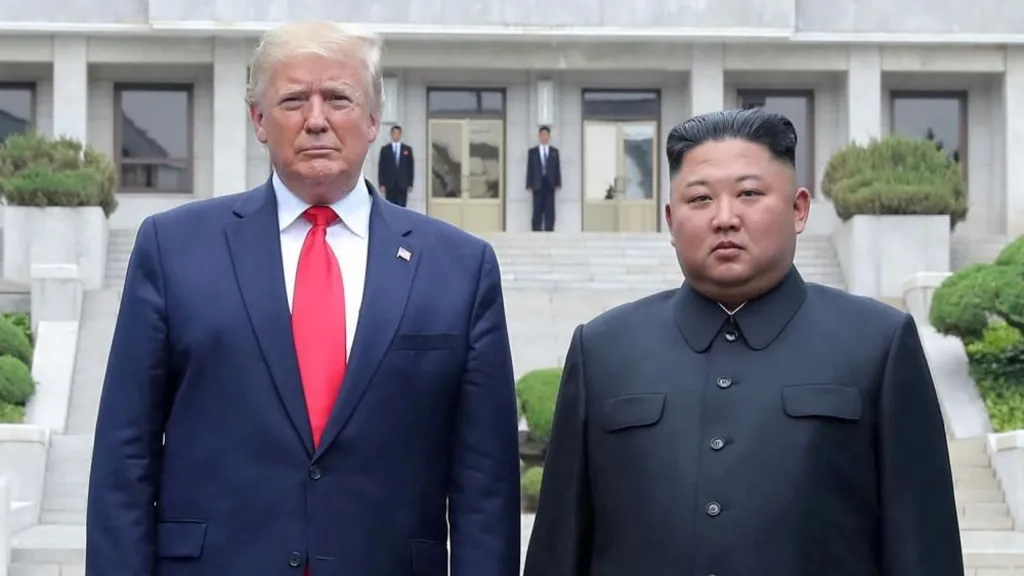
Trump and Kim met at Panmunjom in the Demilitarized Zone (DMZ) in 2019
South Korea’s annual Ulchi Freedom Shield military exercises with the United States involving 18,000 Korean troops and forces from 11 allied nations ended abruptly on Friday. It was cut short after President Trump ordered the Pentagon to scale back the drills, which he called costly and “inappropriate and hostile” toward North Korea.
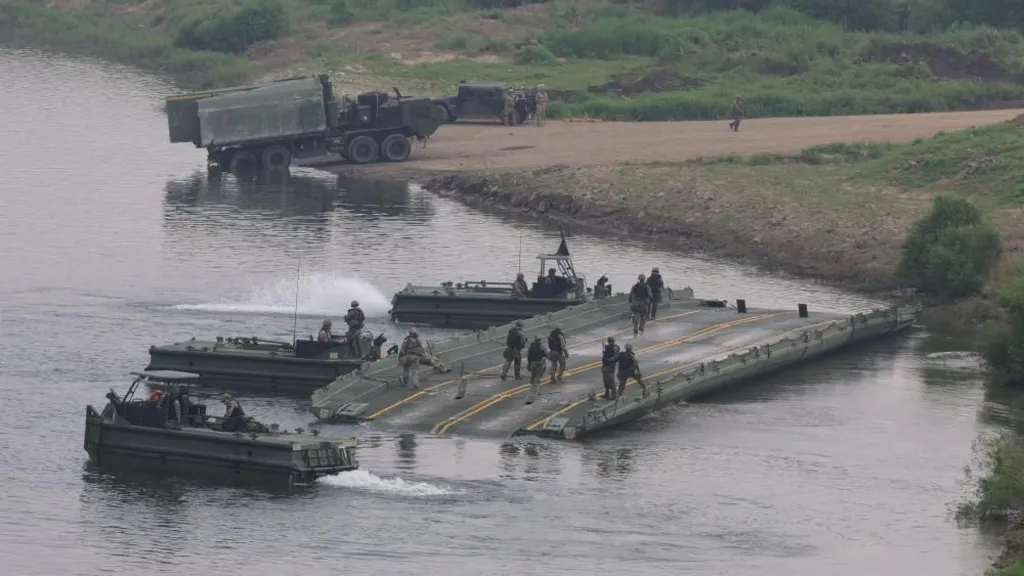
US troops conduct a river-crossing drill in Paju as part of the exercises this week
The decision came as a big surprise to Seoul as Foreign Minister Cho Hyun tried to frame it as mutual, but admitted officials had no advance warning. The move has also unsettled Japan and Taiwan, who both rely on US security commitments in the region.
Trump has indicated that he expects to meet Kim Jong Un later this year, reviving a diplomatic approach reminiscent of his first term’s 2018 summit, after which he similarly suspended joint drills, prompting Pyongyang to demolish a liaison office with the South and cut off communication.
Analysts warn Trump’s unilateral style has eroded confidence in Washington as a reliable ally, with some fearing further troop drawdowns from the 27,000 US personnel stationed in South Korea, or a retreat from the policy of North Korean denuclearization. Compounding to Seoul’s unease, Washington has increasingly tied trade friction, including disputes over defense-cost sharing and investment pledges to security cooperation, fueling calls from some Korean policy voices for the country to pursue its own nuclear deterrent.
North Korea, meanwhile, has shown no signs of softening. This week it launched ballistic missiles toward Japan and reasserted its right to use nuclear weapons if threatened.
Kim Yo Jong, the North Korean leader’s sister, dismissed the scaled-back drills as insignificant to Pyongyang and said they don’t alter its “hostile and offensive” stance toward the South.
President Lee Jae Myung has nonetheless tried to make the best of the situation, publicly praising Trump’s decision and pledging to boost South Korea’s own defense spending.