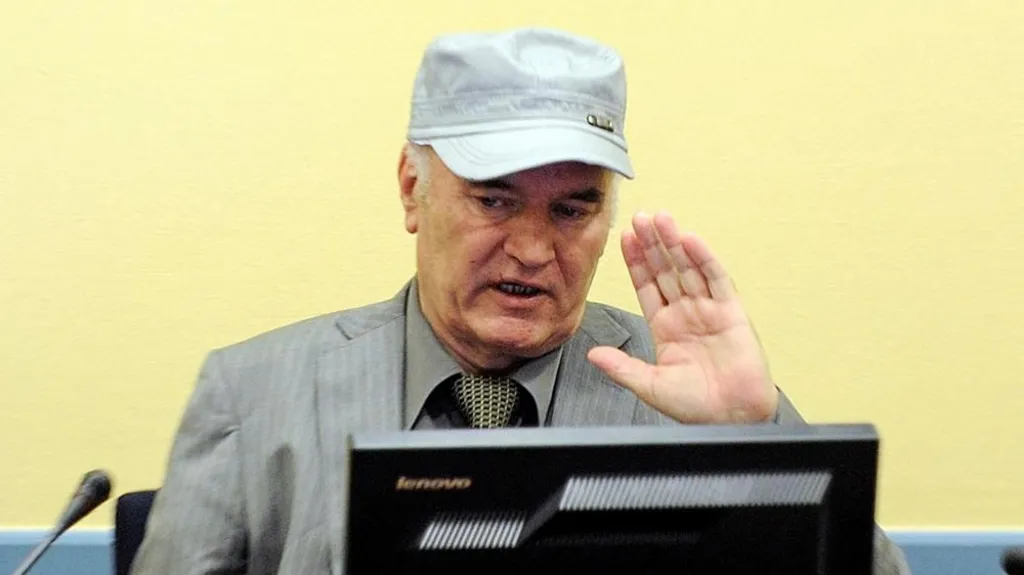
Ratko Mladic
He evaded capture for sixteen years, stood trial for genocide, and spent his final years confined to a wheelchair. Now, the man once known as the “Butcher of Bosnia” is dead.
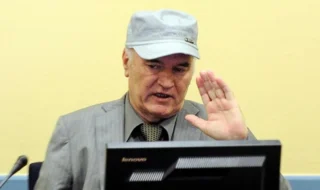
Ratko Mladić, the former Bosnian Serb military commander convicted of orchestrating some of the worst atrocities of the Balkan wars, died Thursday in the hospital wing of a UN detention facility at The Hague. He was 84.
Mladić had been serving a life sentence since 2017, when a UN tribunal found him guilty of genocide, war crimes and crimes against humanity for his role in the 1992-95 conflict that tore apart the former Yugoslavia. An appeals court upheld the conviction in 2021.
His death caps a saga that began in the killing fields of Bosnia and ended in a hospital bed nearly two decades later. After the war, Mladić vanished into hiding, evading international justice for 16 years before he was finally located in rural Serbia in 2011 and extradited to stand trial in the Netherlands.
The UN court confirmed his death in a statement Thursday, noting that Dutch authorities have opened an investigation and that the tribunal’s top judge has ordered a full inquiry into the circumstances surrounding it.
The end came just months after judges rejected a plea for his early release. In May, the court acknowledged his condition was “dire” but concluded he was receiving “comprehensive and compassionate treatment” behind bars. His lawyers argued he had been bedbound or wheelchair-dependent for an extended period and had later suffered a suspected stroke that robbed him of most of his ability to speak. Throughout his imprisonment, which began in 2011, Mladić refused to recognize the legitimacy of the UN court.
As commander of Bosnian Serb forces, Mladić led a campaign against Bosnian Croat and Bosniak populations that became a byword for “ethnic cleansing.” His forces laid siege to Sarajevo for years, killing more than 10,000 people, and carried out the massacre of roughly 8,000 Muslim men and boys at Srebrenica which is considered Europe’s worst atrocity since World War II.
For survivors, his death offers little peace. Hasan Hasanović, who lost his father and twin brother at Srebrenica and now works at the memorial center there, told the BBC World Service’s Newshour that Mladić’s passing does not bring closure, since those who were murdered cannot be brought back. He described the death as merely “a biological necessity”, one that does nothing to undo the divided, genocide-denying society left in its wake.
Reaction elsewhere split sharply along familiar lines. Bosnian Serb separatist leader Milorad Dodik told Reuters that Mladić was respected among Serbs as a commander who stood to defend them. In Belgrade, some residents echoed that sentiment; one man, Milan, said he believed Mladić had simply been doing his duty in protecting the Serbian people, while another, Vasilije, called his conviction “a total injustice.”
Three decades on, Mladić’s death does not settle the argument over his legacy, it merely removes its last living symbol.