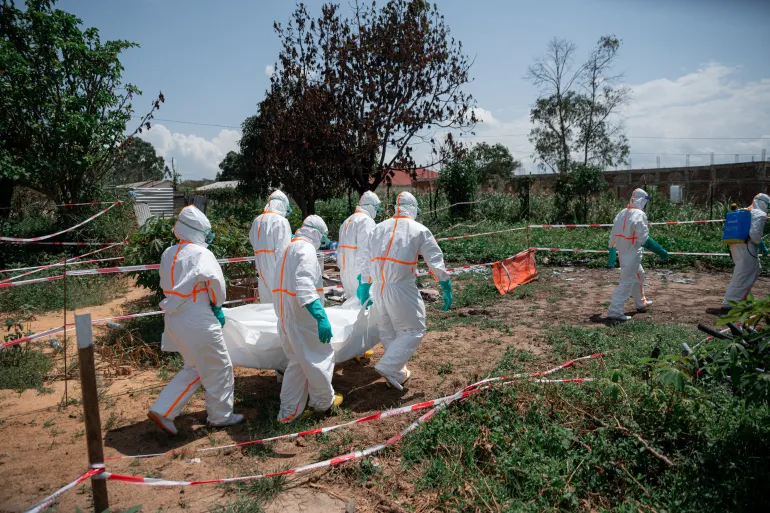
Red Cross volunteers in the Democratic Republic of the Congo carry the body of an Ebola victim on June 8, 2026 [AFP]
The Ebola outbreak in the Democratic Republic of the Congo has become the deadliest in the country’s history, with 2,325 confirmed deaths, surpassing the toll from the 2018-2020 epidemic.
Confirmed infections have climbed to 4,945, including 101 new cases in a single day, according to the DRC’s National Public Health Institute.
UN humanitarian chief Tom Fletcher warned that the virus is winning and the response cannot afford to let it outrun containment efforts. WHO Director-General Tedros Adhanom Ghebreyesus has gone further, cautioning that at its current trajectory, the outbreak could surpass the catastrophic 2014-2016 West African epidemic that killed more than 11,000 people.
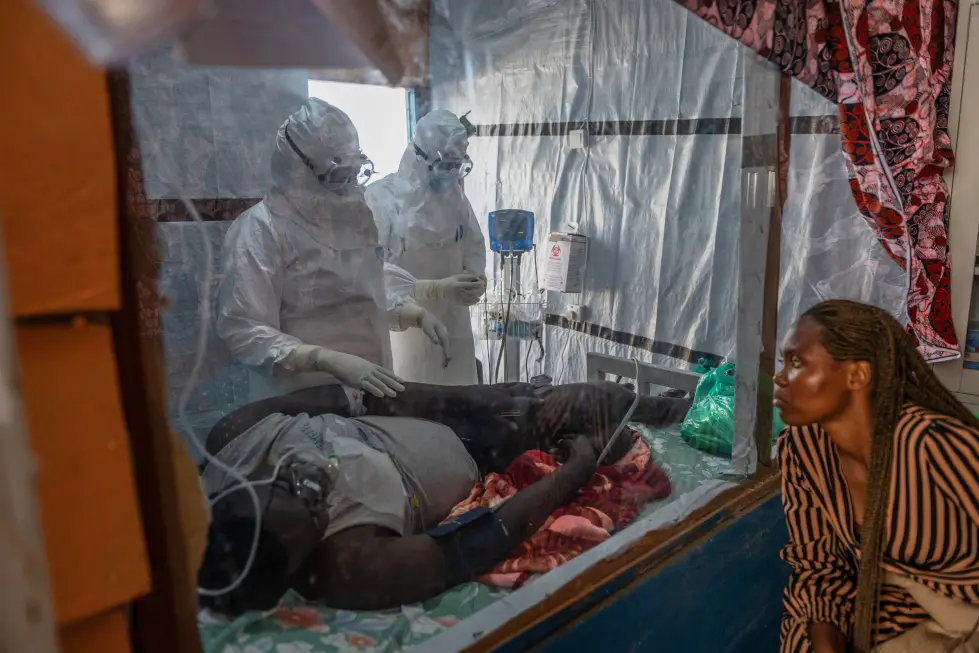
Health workers tend to an Ebola patient at the Rwampara Treatment Center in Ituri, Congo, Thursday, June 18, 2026. (AP Photo/Moses Sawasawa)
What makes this outbreak especially alarming is not just its scale but it is already the largest in DRC history by case count which is a grim shift in its lethality. The case fatality rate has more than doubled since early June, from roughly 20% to 46%, meaning nearly half of confirmed patients now die. This trend runs counter to how outbreaks typically behave, as improved contact tracing usually drives fatality rates down over time, not up.
Doctors Without Borders’ Thomas Parisch points to a troubling pattern as too many cases are still being caught too late, with some patients only identified after dying in their communities, indicating a sign of just how far the outbreak has outrun early detection efforts.
Compounding the crisis, the Bundibugyo ebolavirus which is the strain responsible for the disease has no approved vaccine or treatment. Weak health infrastructure, the region’s remoteness, and armed conflict near DRC’s borders with South Sudan, Uganda, and Rwanda have all hampered the response since the outbreak was declared on 15th May 2026. A handful of experimental vaccines and therapies are now under evaluation, though evidence of their effectiveness remains limited to animal studies.